Why changes take time to show
Fix, wait, measure: the honest cadence of visibility work. Affects: SEO + AIO
The lag is real, not a failure
Search engines recrawl and rerank on their own schedule: days to weeks for most sites, faster for frequently-updated pages, slower for quiet ones. AI assistants refresh their view of the web on their own cadence too. On-site fixes are detected quickly; their external effects arrive later.
This lag is why churning advice daily produces motion instead of progress. The productive loop: make the prioritized fixes, confirm they're detected on your site, then let the external systems catch up before judging results.
What this site does about it
Re-checks verify each recommendation against a fresh crawl of your site (detected or still open) and clearly label the items a crawl alone cannot confirm as awaiting external data, rather than guessing. Your scores update from measured changes immediately; rankings follow on the engines' schedule.
How to work with the lag
- Batch your fixes, then re-check once, not after every single edit.
- Track direction over weeks, not position over hours.
- Use Search Console's free reports to watch recrawling actually happen.
- Keep publishing while you wait; fresh activity accelerates recrawling.
- Distrust anyone promising overnight rankings; that's not how the pipeline works.
Common mistakes
Reverting good changes after 48 hours because 'nothing happened'. Chasing a new tactic every week so nothing ever gets measured. Judging SEO work in a window shorter than the engines' own reaction time.
See where your site stands on this: grade it and every check shows its evidence.
Grade my site →More guides
Building a website that gets found
Starting from zero? The platform choices, pages and foundations that decide whether your site is visible from day one.
Read the full guide →
Making your website better, in the right order
The improvement playbook: what to fix first, what compounds, and how to verify each step actually landed.
Read the full guide →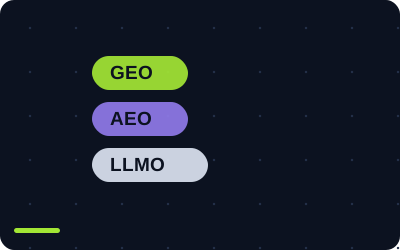
GEO, AEO & LLMO: the new alphabet, explained
The three terms you'll hear most for AI-era optimization: what each means, how they differ, and what to actually do about them.
Read the full guide →
How search ranking works
Crawling, indexing, ranking, and which of the three you actually control.
Read the full guide →
AI & answer engines (AIO)
A growing share of questions never reach a results page; an assistant answers them.
Read the full guide →
Titles & meta descriptions
Your headline and your sales pitch in every results page and AI citation.
Read the full guide →