Titles & meta descriptions
Your headline and your sales pitch in every results page and AI citation. Affects: SEO + AIO
Small tags, outsized influence
The title tag is the strongest on-page statement of what a page is about. It becomes your clickable headline in search results, your browser-tab label, and the name AI assistants use when citing you. The meta description becomes the snippet under the headline; it rarely affects ranking directly, but it decides whether people click.
Missing either one forces search engines to improvise from page content, often badly and differently for every query.
What this site measures
Title presence and length (roughly 15–60 characters displays fully), meta description presence and length (roughly 50–160 characters), and exactly one H1 heading stating the page's topic. Each check shows the actual text our crawler saw.
How to improve
- Lead the title with what the page is, in the words your audience searches.
- One title per page, unique across the site; duplicates blur every page involved.
- Write the description as one honest sentence of benefit plus one of specifics.
- Put the brand at the end of the title, not the start, unless you're a household name.
- Keep one H1 per page that matches the title's promise.
Common mistakes
Home pages titled 'Home'. Keyword-stuffed titles that read like spam and get rewritten by Google anyway. Descriptions that repeat the title instead of adding specifics. Multiple H1s from copy-pasted page builders.
See where your site stands on this: grade it and every check shows its evidence.
Grade my site →More guides

Building a website that gets found
Starting from zero? The platform choices, pages and foundations that decide whether your site is visible from day one.
Read the full guide →
Making your website better, in the right order
The improvement playbook: what to fix first, what compounds, and how to verify each step actually landed.
Read the full guide →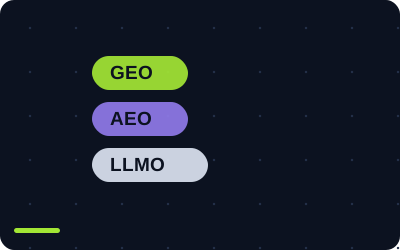
GEO, AEO & LLMO: the new alphabet, explained
The three terms you'll hear most for AI-era optimization: what each means, how they differ, and what to actually do about them.
Read the full guide →
How search ranking works
Crawling, indexing, ranking, and which of the three you actually control.
Read the full guide →
AI & answer engines (AIO)
A growing share of questions never reach a results page; an assistant answers them.
Read the full guide →
Speed & Core Web Vitals
Slow pages lose visitors before they load, and page experience feeds rankings.
Read the full guide →