Velocidad y Core Web Vitals
Slow pages lose visitors before they load, and page experience feeds rankings. Afecta a: SEO + AIO
Why milliseconds matter
Visitors abandon pages that take more than a few seconds, and search engines fold page-experience metrics (Google's Core Web Vitals) into ranking. Speed also controls crawl efficiency: a slow server gets crawled less, so changes take longer to be noticed. AI crawlers time out on slow pages the same way people do.
The big levers, in order: server response time (TTFB), text compression, HTTP/2 or newer, render-blocking scripts, and image weight.
What this site measures
TTFB from our server (a lab measurement, labeled as such), HTML document size, the number of referenced resources, render-blocking scripts in the head, and modern image delivery (WebP/AVIF, lazy loading). Google's free PageSpeed Insights adds field data from real Chrome visitors; the two views complement each other.
How to improve
- Get server response under ~300 ms with caching or a CDN.
- Enable gzip or Brotli compression and HTTP/2 on the server, usually one setting.
- Add defer or async to every script that isn't needed for first paint.
- Serve images as WebP/AVIF, sized to their containers, with loading="lazy".
- Audit third-party tags ruthlessly; each one is someone else's slow server.
Common mistakes
A dozen marketing pixels loaded synchronously in the head. Hero images shipped at 4000px width. Cheap shared hosting with 2-second TTFB under real traffic. Measuring once on office wifi and calling it fast.
Descubre cómo está posicionado tu sitio en esto: califícalo y cada verificación mostrará sus evidencias.
Evaluar mi sitio →Más guías
Cómo crear un sitio web que se encuentre
Starting from zero? The platform choices, pages and foundations that decide whether your site is visible from day one.
Leer la guía completa →
Cómo mejorar tu sitio web, en el orden correcto
The improvement playbook: what to fix first, what compounds, and how to verify each step actually landed.
Leer la guía completa →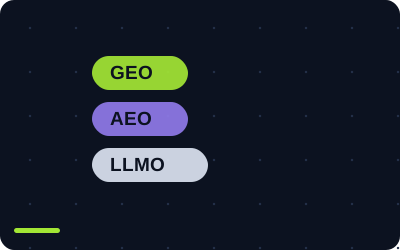
GEO, AEO y LLMO: el nuevo alfabeto, explicado
The three terms you'll hear most for AI-era optimization: what each means, how they differ, and what to actually do about them.
Leer la guía completa →
Cómo funciona el posicionamiento en buscadores
Crawling, indexing, ranking, and which of the three you actually control.
Leer la guía completa →
IA y motores de respuesta (AIO)
A growing share of questions never reach a results page; an assistant answers them.
Leer la guía completa →
Títulos y meta descripciones
Your headline and your sales pitch in every results page and AI citation.
Leer la guía completa →