IA y motores de respuesta (AIO)
A growing share of questions never reach a results page; an assistant answers them. Afecta a: AIO
The new front door
ChatGPT, Claude, Perplexity and Google's AI results answer questions directly, citing a handful of sources instead of listing ten blue links. They read the open web through their own crawlers: GPTBot, ClaudeBot, PerplexityBot, Google-Extended and others. Answer-engine optimization (AIO) is the practice of being readable, quotable and citable by these systems.
The economics differ from classic search: an assistant cites two or three sources, so being readable and clearly structured matters even more than on a results page where position eight still gets some clicks.
What this site measures
Whether robots.txt allows or blocks each major AI crawler (blocking is a legitimate choice, but it removes you from AI answers), an llms.txt file, FAQ/HowTo schema, clear H2 section structure, a direct opening summary an assistant can quote, and an RSS feed. Structured data and content clarity also feed the AIO score, because assistants parse the same markup search engines do.
How to improve
- Decide deliberately about AI crawlers in robots.txt; don't block by accident.
- Open key pages with a 1–3 sentence plain answer to the question the page serves.
- Use descriptive H2 sections; assistants extract well-bounded passages.
- Mark up genuine FAQs with FAQPage schema.
- Publish llms.txt summarizing your most important pages for assistants.
- Keep facts on your site current; assistants quote what they read, dates included.
Common mistakes
Blocking every bot in robots.txt years ago and forgetting; burying the answer under 800 words of preamble; marking up FAQs that don't exist on the visible page (schema must match visible content); assuming AI traffic doesn't matter to your audience.
Descubre cómo está posicionado tu sitio en esto: califícalo y cada verificación mostrará sus evidencias.
Evaluar mi sitio →Más guías
Cómo crear un sitio web que se encuentre
Starting from zero? The platform choices, pages and foundations that decide whether your site is visible from day one.
Leer la guía completa →
Cómo mejorar tu sitio web, en el orden correcto
The improvement playbook: what to fix first, what compounds, and how to verify each step actually landed.
Leer la guía completa →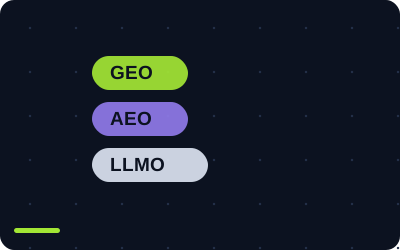
GEO, AEO y LLMO: el nuevo alfabeto, explicado
The three terms you'll hear most for AI-era optimization: what each means, how they differ, and what to actually do about them.
Leer la guía completa →
Cómo funciona el posicionamiento en buscadores
Crawling, indexing, ranking, and which of the three you actually control.
Leer la guía completa →
Títulos y meta descripciones
Your headline and your sales pitch in every results page and AI citation.
Leer la guía completa →
Velocidad y Core Web Vitals
Slow pages lose visitors before they load, and page experience feeds rankings.
Leer la guía completa →